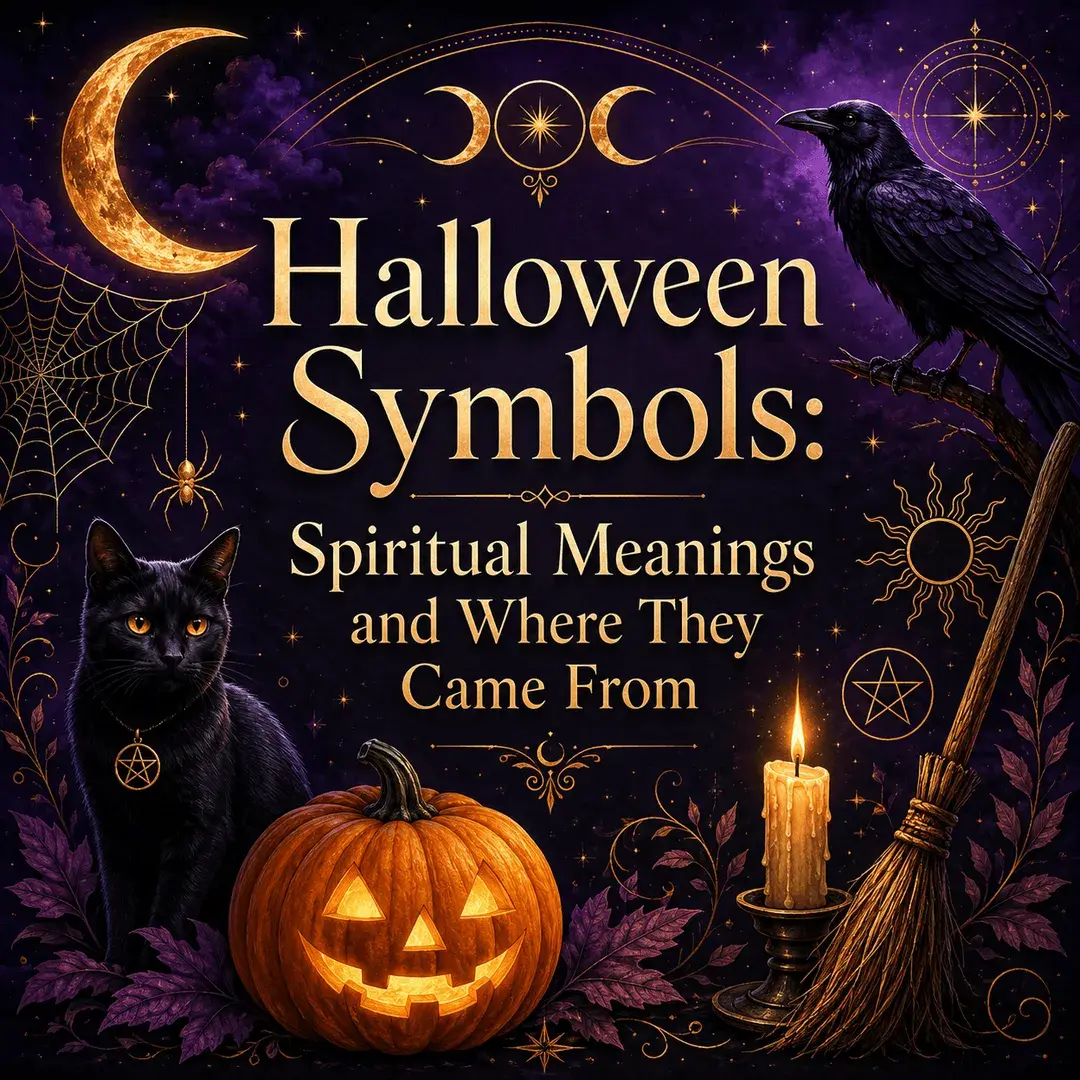
Halloween Psychic Symbols: Spiritual Meanings and the History Behind Them
Where Halloween actually came from
Halloween is more than candy and costumes. It is one of the oldest celebrations still on our calendar, and almost nothing about it is random. The carved pumpkin on your porch, the costume your neighbor's kid is wearing, even the knock at your door, every piece of it started as something meaningful, and the stories are better than most people realize.
It begins over two thousand years ago with the Celtic festival of Samhain, pronounced SAH win, which marked the end of the harvest and the start of winter. For the Celts, October 31 was essentially New Year's Eve. The old year of light was ending, the dark half of the year was beginning, and they believed that on this one night the boundary between our world and the spirit world grew thin. Ancestors could visit. So people lit great bonfires, set out food for loved ones who had passed, and gathered close. It was not a night of fear. It was a night of remembrance, closer to a family reunion than a haunted house.
The Romans added their own layer when they arrived in Celtic lands. Their late October festival honored Pomona, the goddess of orchards, whose symbol was the apple. That is the reason apples are still tangled up in the season, and it is where bobbing for apples comes from. Centuries later, the Christian calendar placed All Saints Day on November 1, which made October 31 All Hallows Eve. Say that quickly for a few hundred years and you get Halloween. Around the same time of year, Mexico celebrates Dia de los Muertos, when families honor their ancestors with flowers, candles, and favorite foods. Different cultures, same beautiful instinct: set aside the turn of the season to remember the people we love.
The story behind the jack o lantern
The glowing pumpkin has one of the best origin stories in all of folklore. It comes from an old Irish tale about a man called Stingy Jack, a trickster who wandered the night with only a burning coal inside a carved turnip to light his way. Irish families began carving their own turnip lanterns and setting them in windows to keep wandering spirits moving along past their homes.
Here is the part most people never hear. The original jack o lanterns were turnips, and they were genuinely creepy little things, shriveled and fierce. When Irish immigrants came to America in the 1800s, they discovered the pumpkin, native to this continent, bigger, brighter, and far easier to carve. The tradition switched vegetables, and the pumpkin became the face of the holiday. Today people read the jack o lantern as a symbol of light holding its ground against the dark, a small beacon of protection and welcome on the doorstep. When you carve one, you are continuing a practice that crossed an ocean and swapped species without ever losing its meaning.
Why we wear costumes and go door to door
Costumes started as spiritual camouflage. At Samhain, with the veil believed thin, people wore disguises so any wandering spirits would take them for fellow spirits and pass them by. What began as protection slowly turned to play, and by now dressing up is one of the few nights adults give themselves permission to try on another self for a few hours. Many people find that the costume they choose says something true about them, which is its own kind of reading.
Trick or treating has a gentler ancestry than its name suggests. In medieval Britain and Ireland, the poor went door to door on All Souls Day offering prayers for the household's departed loved ones in exchange for small spiced breads called soul cakes. The practice was called souling. In Scotland and Ireland, children later went guising, performing a song or a verse for a treat. Immigrants carried these customs to America, where by the 1930s they had merged into the trick or treating we know. So the knock at your door in October is the modern echo of an exchange that was always about blessing, generosity, and remembering the dead. The candy is new. The goodwill is ancient.
What the classic symbols mean
Black cats may be the most misunderstood symbol of the season. In ancient Egypt, cats were honored companions and protectors. In medieval Europe, folklore tied them to witches, and the poor black cat's reputation suffered for centuries. Today that old story has flipped. Many people now see the black cat as a symbol of intuition, independence, and quiet knowing, an animal that sees clearly in the dark. If a black cat crosses your path this season, you are within your rights to call it good luck.
Witches themselves deserve their history back. Behind the green faced cartoon is the memory of wise women and village herbalists, keepers of herbal knowledge and intuition in their villages. As a symbol today, the witch stands for personal power, transformation, and trusting what you know. Ghosts, in the spiritual reading of the season, are not horror movie villains but the presence of ancestors, the sense that the people we love do not simply vanish. That is the heart of the whole holiday, and you can read more about how that connection is understood in what a psychic medium does.
The creatures of the night each carry their own meaning. Owls stand for wisdom and the ability to see what others miss. Bats have an earthy explanation for their place on the guest list: the great Samhain bonfires drew clouds of insects, and the insects drew bats wheeling above the flames, so bats literally attended the original parties. Spiritually they are read as symbols of rebirth, since they emerge from caves, the earth's hidden places.
Crows deserve a special word, because they have been unfairly cast as bad omens. In many traditions, including Celtic and Native American stories, the crow is a messenger between worlds, prized for its intelligence and memory. Modern science agrees on the smart part, since crows can recognize individual human faces and remember them for years. When a crow lingers near you this season, the older and kinder reading is that a message or an insight is trying to reach you, and it is worth a quiet moment of attention.
Spiders and their webs are a matched set. The spider stands for patience and creativity, weaving with steady skill, and finding one in your house in autumn was long considered a sign of good fortune coming. The web itself carries its own meaning: every thread connects to every other, a picture of how the pieces of a life tie together, and how one small choice tugs on everything around it. When you drape those cottony webs across the porch railing, you are decorating with an old symbol of fate, connection, and the way everything we do is woven into something larger.
White candles are the quietest symbol of the season and one of the oldest. Across almost every tradition, a white candle stands for peace, clarity, and remembrance. Lighting one in the window on All Hallows Eve was a way of guiding the spirits of loved ones home and telling them they were welcome and remembered. It remains one of the simplest and most beautiful rituals you can do this season. Light a white candle, say the name of someone you miss, and let it burn while you think of them. No ceremony required, just intention.
Even the colors are doing quiet work. Orange is the harvest, the pumpkins, the turning leaves, the last warmth of the year. Black is the night, the rest, the unknown ahead. Together they hold the exact balance the holiday sits on, light and dark, activity and stillness, this world and the next. Skeletons carry the same message in bone: life is precious because it is brief, so live it fully. Cultures that celebrate this season have never seen that as morbid. It is the opposite. It is a reminder to be here while you are here.
Why your intuition feels stronger around Halloween
Many people quietly notice that late October feels different. Dreams get more vivid. Memories of loved ones surface. Small signs seem to land with more weight. The traditional explanation is the old Samhain belief that the veil between worlds is thinnest now. There is also a simpler explanation that is just as real: autumn slows us down. The days shorten, we spend more time indoors and in reflection, and we naturally become more aware of our feelings and the small meaningful moments we rush past in summer. Both explanations can be true at once. If you want to go deeper on this feeling, we look at it closely in why so many people feel more energy around Halloween.
However you understand it, this season rewards paying attention. A few gentle ways to work with it: light a candle for someone you miss and say their name out loud. Look through old photographs. Write down the dreams you remember in the morning. Notice which symbols keep appearing in your days, and if you want help reading them, our full guide to psychic symbols covers the signs people notice most all year round.
The season has more to explore too. Read about the spiritual significance of a blue moon on Halloween, or browse our October and Halloween spiritual FAQ for quick answers on psychic energy, spirits, and superstitions.
Frequently asked questions
What do Halloween symbols mean spiritually? Nearly all of them trace back to remembrance and protection. The jack o'lantern is a light keeping watch against the dark. Costumes began as disguises to slip past wandering spirits. Ghosts stand for the presence of ancestors, and the orange and black of the season represent harvest and night, life and rest. Under the candy and the decorations, Halloween is a holiday about honoring the people who came before us.
Why do we carve pumpkins on Halloween? The custom comes from an Irish folktale about Stingy Jack, who wandered the night with a coal in a carved turnip. Irish families carved turnip lanterns to keep wandering spirits moving past their homes, and when Irish immigrants reached America in the 1800s they switched to the pumpkin, which was bigger and easier to carve. The glowing face on your porch is that same old light of protection.
What is Samhain? Samhain, pronounced SAH win, is the ancient Celtic festival that Halloween grew from. It marked the end of the harvest and the start of winter, and the Celts treated it as their new year. They believed the boundary between our world and the spirit world was thinnest on this night, so they lit bonfires, honored their ancestors, and set out food for loved ones who had passed.
Why are black cats associated with Halloween? Medieval European folklore linked black cats to witches, and the association stuck for centuries. The older story is kinder: in ancient Egypt, cats were treasured protectors. Today many people read the black cat as a symbol of intuition and independence, and seeing one this season can just as easily be taken as good luck.
What does it mean when people say the veil is thin? It refers to the old belief that the boundary between the physical world and the spirit world loosens around late October, making it easier to sense loved ones who have passed. Whether you take that literally or simply notice that this reflective season sharpens your awareness, many people find their intuition and dreams feel stronger now.
Is Halloween a spiritual holiday? It began as one and, underneath the fun, it still is. Samhain, All Hallows Eve, and Dia de los Muertos all set aside this turn of the season to honor the dead and reflect on the year. You can enjoy the candy and costumes and still use the season for remembrance. The two have gone together for centuries.
What does a white candle mean on Halloween? A white candle stands for peace, clarity, and remembrance. Lighting one in the window on All Hallows Eve was traditionally a way of welcoming the spirits of loved ones home and letting them know they were remembered. It is still one of the simplest rituals of the season: light the candle, say the person's name, and spend a moment with their memory.
What does it mean when you see a crow? Crows have long been messengers in folklore, prized for their intelligence and their memory, and many traditions read a lingering crow as a sign that a message or an insight is trying to reach you. The gloomy reputation is mostly modern. The older reading is attention, intelligence, and communication between worlds.
Why do we wear costumes on Halloween? At Samhain, people disguised themselves so wandering spirits would take them for fellow spirits and pass them by. Protection slowly turned into play, and the costume party was born. Many people find the costume they are drawn to says something true about who they are or who they are becoming.
Where does trick or treating come from? It descends from souling and guising. In medieval Britain and Ireland, people went door to door offering prayers for a household's departed loved ones in exchange for soul cakes, and children later performed songs or verses for treats. Immigrants brought the customs to America, where they merged into trick or treating by the 1930s. The exchange was always about blessing and generosity.
Ready to Talk with a Gifted Reader?
The Psychic Line is an independent psychic service you can trust, since 1991. Call us any time at (800) 966 2294 to connect with a reader, or book a clairvoyant reading or spiritual reading whenever you feel ready.
The season's night flyers have their own story too: our guide to moth symbolism explains why the quiet visitor at the porch light means more than people think.
- Log in to post comments