
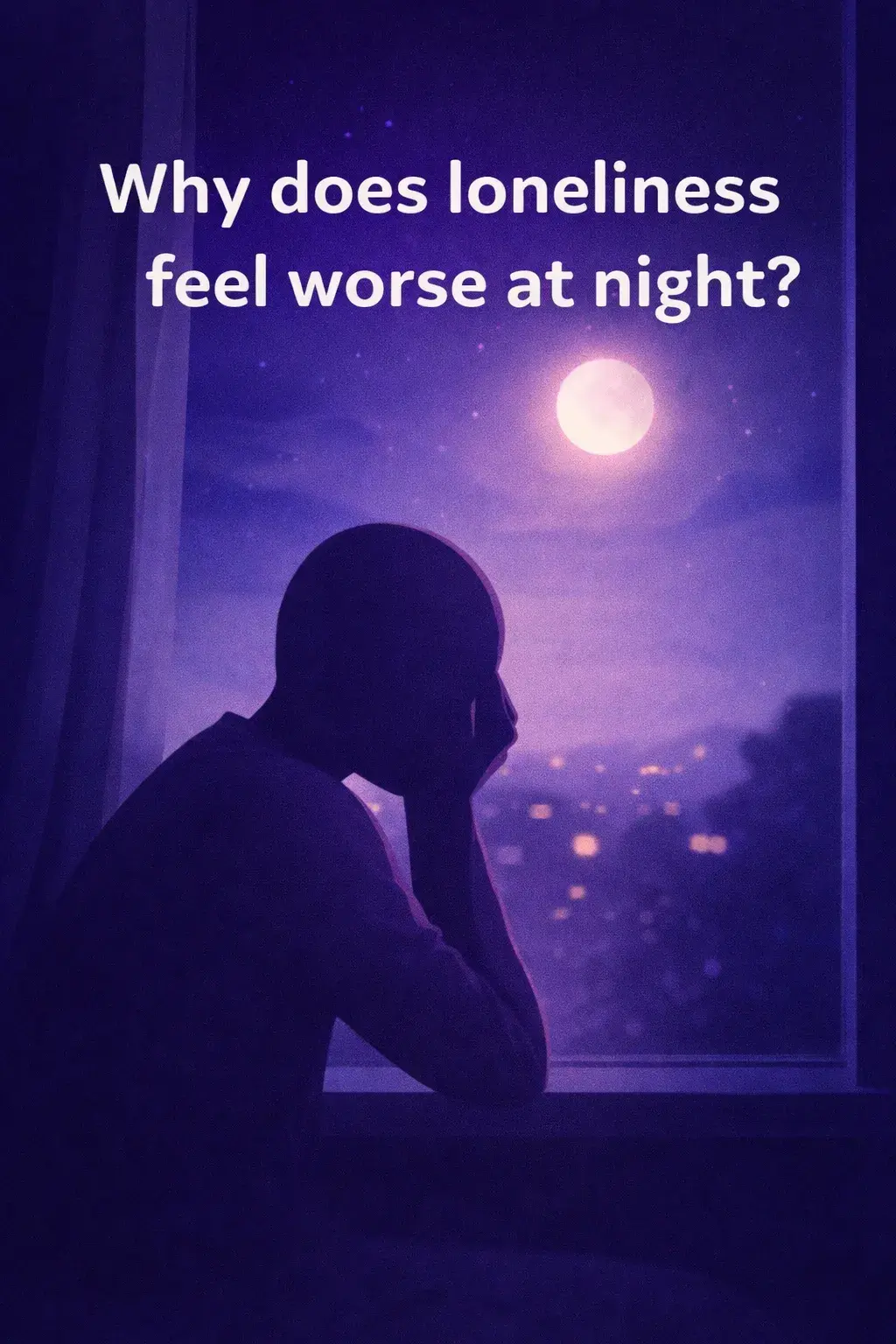
Why Does Loneliness Feel Worse at Night?
Loneliness often feels heavier at night. During the day, distractions keep you moving — work, responsibilities, conversations, noise. But when the world quiets down, emotions have more space to surface. If you’ve ever felt okay during the day but deeply alone once night arrives, you’re not imagining it.
Many people quietly wonder, “Why does loneliness feel worse at night?” The answer has less to do with weakness and more to do with how the mind and emotions respond to silence.
Quick Answer: Why nighttime loneliness hits harder
Loneliness feels worse at night because distractions fade and emotions rise. Without noise, tasks, or expectations, your thoughts become louder — especially the ones you’ve been holding back all day.
Why the quiet makes emotions stronger
Your mind finally slows down
During the day, your brain is focused on solving problems and getting through tasks. At night, there’s nothing demanding your attention — so your mind turns inward. This is when unresolved feelings, worries, and emotional needs rise to the surface.
You’re no longer performing or “holding it together”
Many people spend their days being strong, capable, or supportive for others. When night comes, the pressure to perform disappears. What remains is how you actually feel — and if you’ve been carrying loneliness quietly, it becomes harder to ignore.
Connection feels more noticeable by its absence
Nighttime is often associated with closeness — conversations, companionship, or shared space. When that connection is missing, the contrast becomes more obvious. You’re not just alone; you’re aware of being alone.
Why do I think about her more at night?
Why nighttime loneliness feels emotional, not logical
Nighttime loneliness isn’t about facts. You may know you have people in your life. You may know you’re loved. But emotions don’t operate on logic — they operate on safety, connection, and expression.
This is why people often say, “I don’t want advice — I just don’t want to feel alone with this.”
Is it normal to feel lonelier at night?
Yes. Very normal. Nighttime amplifies emotions because your nervous system shifts out of “doing mode” and into “feeling mode.” This happens to people of all ages, backgrounds, and lifestyles — especially those who carry responsibility or emotional weight during the day.
You may also relate to this deeper explanation: Why do I feel lonely? Confidential, non-judgmental support .
Why talking at night can feel especially comforting
When loneliness peaks at night, talking can bring grounding and relief. A calm conversation can interrupt racing thoughts, provide emotional validation, and remind you that you’re not carrying everything alone.
This is also why many people feel more open, honest, and reflective during nighttime conversations — there’s less pressure and more emotional truth.
When you don’t want therapy — just understanding
Not every moment of loneliness requires therapy. Sometimes you don’t want analysis, diagnosis, or long-term plans. You just want someone to listen without judgment, labels, or expectations.
If you’re curious about how supportive phone conversations work, this may help: What to expect during your first phone psychic reading .
You can also read about others who reached out during moments of uncertainty: Testimonials from our clients .
You don’t have to sit alone with these feelings
Loneliness at night doesn’t mean something is wrong with you. It means your emotional needs are asking to be acknowledged. Support doesn’t have to be dramatic or complicated — sometimes it’s simply being heard.
Call us 1-800-966-2294 if you’d like a confidential, non-judgmental phone conversation with one of our tested psychic readers.
Helpful links: The Psychic Line homepage | Meet our psychic readers | The Psychic Line: A family owned psychic service you can trust
- Log in to post comments